
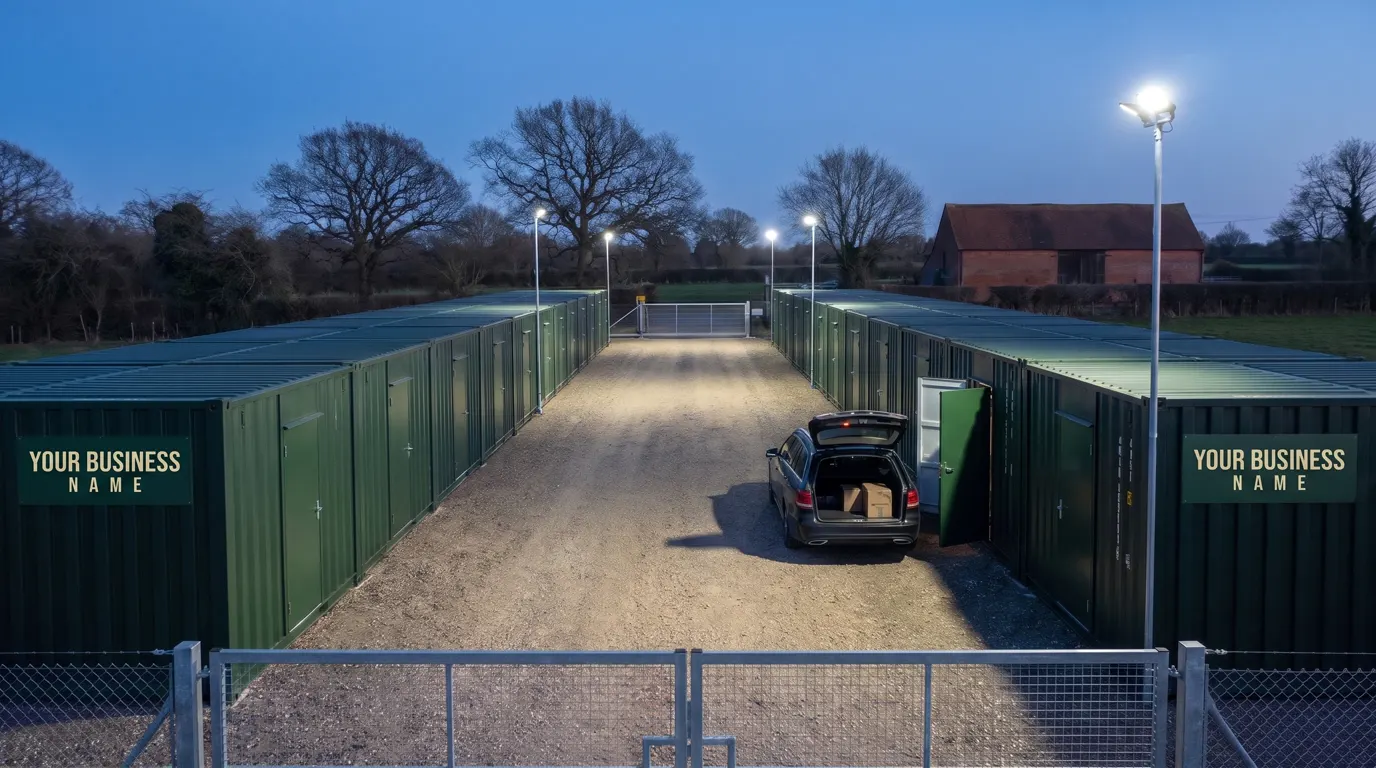
Short answer: to start a container self-storage business you need a level site a lorry can reach, planning permission for storage use, a hard base, a fence with a gate, lights and CCTV, and a first batch of containers that you add to as they let. CS Containers in Bexleyheath, Kent, supplies, resprays and delivers the containers by HIAB lorry across the UK.
Phil Cambridge does not run a storage yard himself. He sells the containers to the people who do, and this guide walks through the steps in the order you will meet them. Updated November 2026.
Is a container self-storage business worth starting?
The market is large and still growing. The Self Storage Association's 2026 report counts 3,143 storage stores in the UK and £1.3bn of yearly turnover. Container storage made up 40% of new store openings, and 76% of use comes from households who have run out of room at home.
Stores are 74.5% full on average, and 79.6% once they are established. A new site will not let every unit in its first month, so plan your money around the units filling over time.
What kind of site do you need?
Container yards are built on spare farmland, on industrial yards and on old brownfield sites. The land needs to be flat or easy to level, drain well and sit close enough to the people who will rent from you.
One Birmingham yard that went to the Upper Tribunal over its rates held the equivalent of 49 standard 20ft containers on 1,453.75 square metres, about a third of an acre, aisles included.
Plan for the lorry and for your customers' cars. A HIAB lorry has to get in, set its legs down and swing each container into place, so the entrance, the turning room and anything overhead all matter. Customers also drive up to their unit to load it, so the aisles must take a car with its boot open. Our guide to how a shipping container is delivered explains the rest. In short, the lorry needs a way in at least 3 metres wide and it is about 4 metres high, and Phil checks the access with you before he books it.
Do you need planning permission for container self-storage?
Almost always. Letting other people store their goods on your land is a change of use to Use Class B8, storage or distribution, which the Planning Portal says includes open-air storage. Councils decide each site on its own merits, and the same points come up again and again:
- How the yard looks from roads, footpaths and neighbours, and in the Green Belt whether it harms openness
- The fence, and how much planting softens it
- Floodlighting, and the hours customers can come and go
- Drainage of the new hard surface
- Traffic on the lane
Conditions are common. In November 2026 an inspector allowed a farm site in Shropshire on appeal, with a cap of 44 containers, every one painted matt dark green, and a planting scheme to be agreed and put in. Elsewhere, council officers have recommended conditions that ban stacking and limit floodlights.
Ask your council for pre-application advice before you buy anything, and use a planning consultant if the site is at all sensitive. Our guide to planning permission for shipping containers covers the general rules.
What base do the containers need?
A firm, level and well-drained hard standing. A container that is out of level twists slightly, and its doors stop opening and closing cleanly. The base also has to carry a loaded HIAB lorry on its legs.
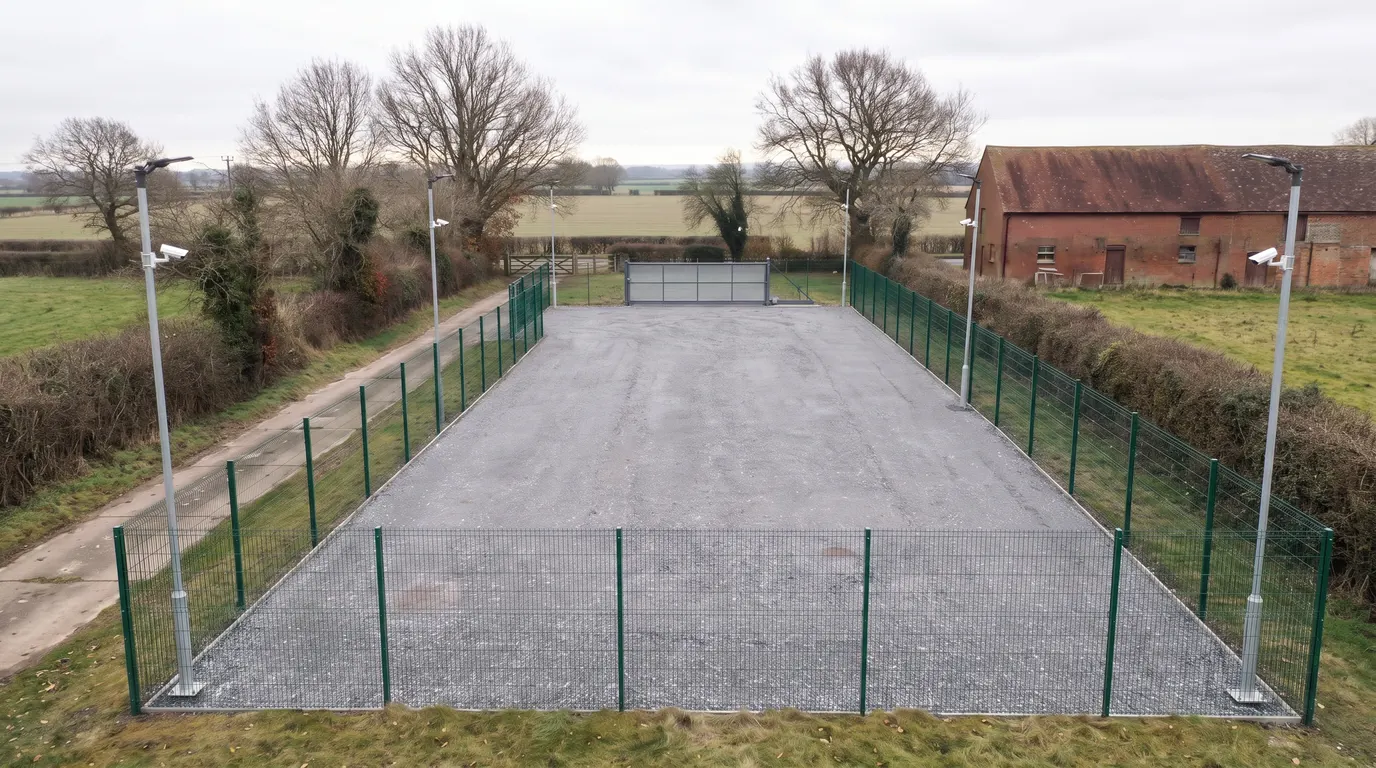
The right build-up depends on your ground, so get a groundworker to price it with the drainage your council will ask about. Lay out the rows and the aisle widths before the base goes down, so every container has a level pad and every door can open fully.
How do you keep a storage yard secure?
Customers are trusting you with their belongings, and most container sites use:
- A perimeter fence and a locking gate, often with keypad, fob or phone entry
- CCTV: the SSA's 2026 report found 90.8% of stores use monitored cameras
- Lighting across the yard and over the doors
- A padlock box on every container, so a padlock cannot be cut with bolt cutters
Phil fits padlock boxes, lockbox hasps, shroud locks, vents and LED lights before the containers leave him, so they arrive ready to let.
Which containers should you buy for self-storage?
The 20ft is the standard storage unit, with 10ft units for customers who need less room and 40ft units for businesses. These are Phil's current prices, before delivery, which is quoted for your postcode:
| Container | From | Good for |
|---|---|---|
| 20ft, used (Grade A) | £1,200 + VAT £1,440 inc VAT | The usual storage unit. Wind and watertight, with marks from its working life. |
| 20ft, new (one-trip) | £1,850 + VAT £2,220 inc VAT | One voyage from the factory. Cleanest look and the longest life. |
| 10ft, used | £1,700 + VAT £2,040 inc VAT | Smaller units for customers who need less room, and for awkward corners. |
| 40ft, used | £1,450 + VAT £1,740 inc VAT | Twice the floor of a 20ft for less money. Suits business customers and bigger lets. |
Three things make a yard easier to run and easier to get through planning:
- One colour. Councils can make it a condition, as Shropshire did. If yours sets a colour, Phil can respray a batch to any RAL colour, such as RAL 6005 moss green.
- Ventilation. A shut steel box full of sofas and boxes can sweat. Vents help, and our guide to why containers get condensation explains the rest.
- Matching door gear. Buy from one supplier so the locking bars, padlock boxes and vents are the same on every unit. Your customers learn one routine and your keys and spares stay simple.
Four stores in one 40ft container
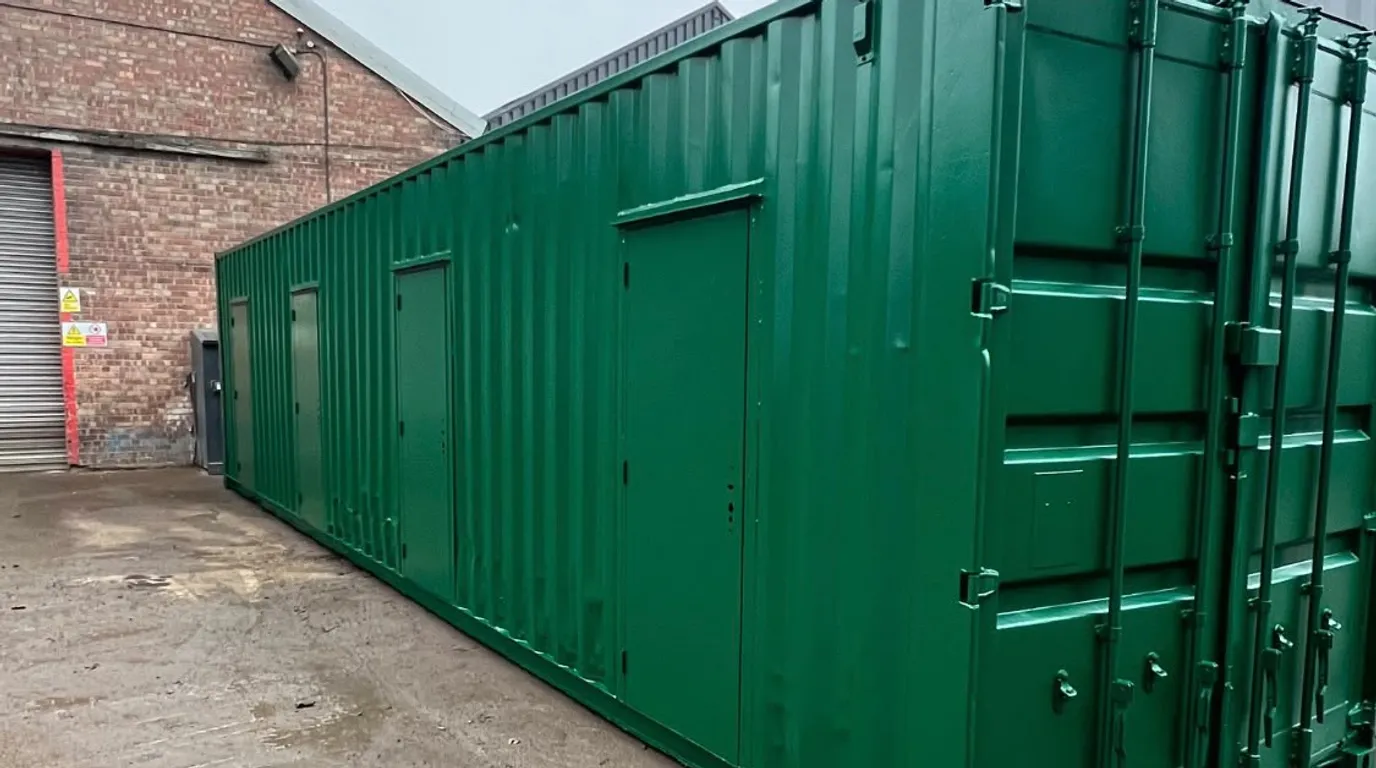
Phil is supplying a self-storage company in Liverpool with 40ft containers split into four 10ft stores. Each store has its own steel door in the long side of the container, so one container lets to four customers and each of them only opens their own space.
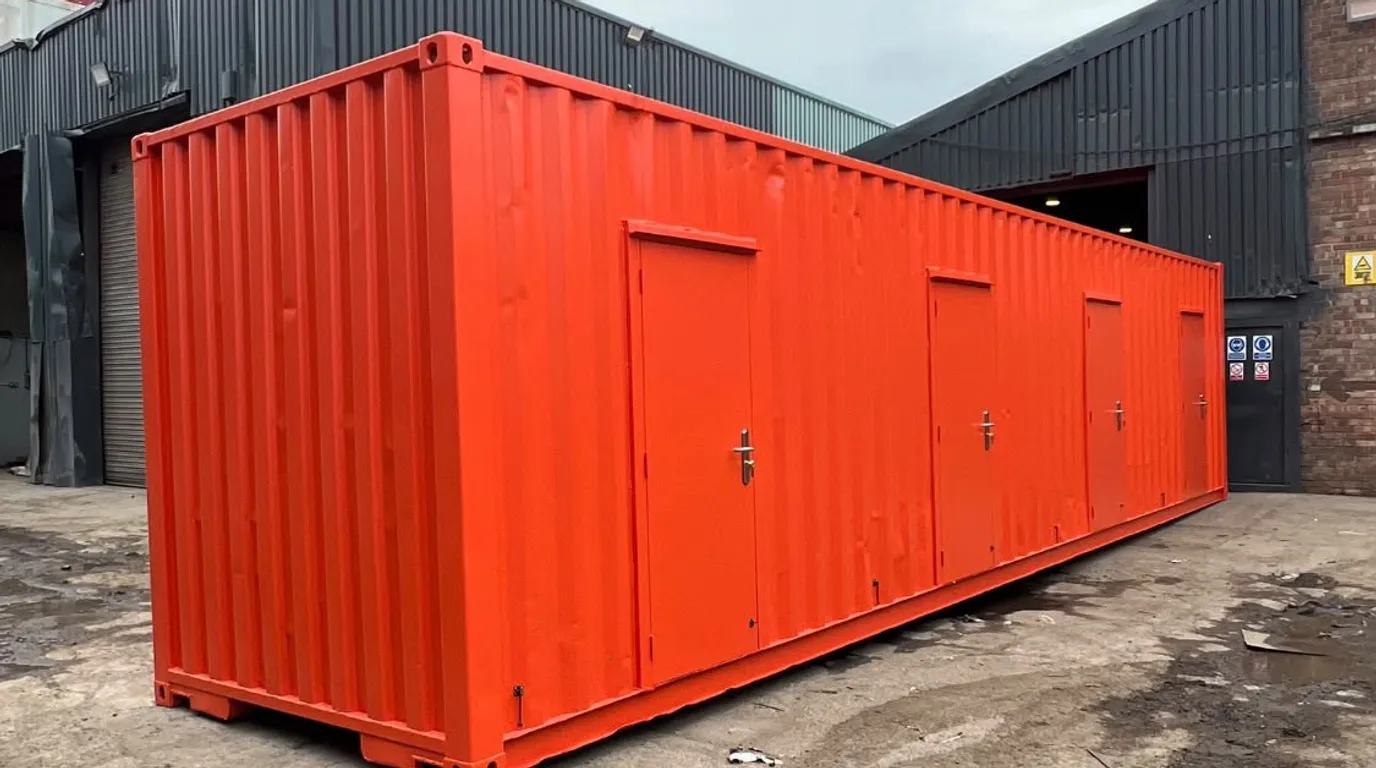
A split 40ft suits customers who want a small unit, and it is one container to deliver and set down instead of four. Phil builds them to order and resprays them to the colour you choose, so call him for a price on the number you need.
How many containers should you start with?
Start with fewer containers than the site will hold. Let the first batch fill, then add rows as the waiting list grows. Phasing like this keeps your early outlay down and lets the yard's own takings pay for the next delivery.
Plan the full layout at the start, though: the base, the aisles, the fence and the lights should be built for the finished yard, even if only the first rows go in. A HIAB lorry can set new containers down on an existing row at any time.
What does it cost, and what can each container earn?
Your costs fall into four groups: the land, the groundwork and fencing, the containers, and the running costs. Get the first two quoted for your site. The containers are in the table above.
Business rates. The Valuation Office values the whole site, land under the containers included, then adds a set amount for each container: £95 for a 20ft and £140 for a 40ft on the 2026 rating list. In England a site with a rateable value of £12,000 or less gets 100% small business rate relief, falling to none at £15,000. For scale, the 49-container Birmingham yard was valued at £17,100 on the 2017 list.
Income. Find out what the storage yards near you charge for a 20ft each month, because local rents vary widely. Take off VAT, multiply by 12, then multiply by the share you expect to have let. Use something below the 79.6% that established stores reach, at least for the first year. That gives a rough yearly income per container to set against everything above.
What else do you need before you open?
- Insurance. Cover for the site and your liability, and a rule that customers insure their goods. If you sell goods insurance to customers yourself, that is regulated by the Financial Conduct Authority, so take advice first.
- ID checks. The SSA and Trading Standards run a voluntary scheme where operators check photo ID and proof of address before letting a unit.
- A storage agreement. Your terms must be fair under the Consumer Rights Act. SSA UK members can use its licence agreements.
- A plan for abandoned goods. In England, Wales and Northern Ireland the Torts (Interference with Goods) Act 1977 sets out how you can sell goods left behind after giving notice. It does not apply in Scotland.
- Booking and payment. 94.2% of stores take bookings online, according to the SSA's report, and storage software also handles invoices and gate codes.
- A Google Business Profile. Google asks storage sites to show office hours, or gate hours if there is no office, and to have permanent signs at the address.
How can CS Containers help?
Phil Cambridge has been in the container trade for over 30 years. For a storage yard he can:
- Supply new and used 10ft, 20ft and 40ft containers, matched for colour and door gear
- Split a 40ft into four 10ft stores, each with its own side door, as he does for a storage company in Liverpool
- Respray a batch to the colour your council asks for
- Fit padlock boxes, vents and lights before delivery
- Convert a container into your site office
- Deliver by HIAB lorry and set each container down where it will stay
- Bring the next batch when the first one has let
Phil is not a planning consultant, but he will look at your layout and your access and tell you what will work. You pay on delivery, never up front. Call Phil on 020 8226 0007 with your site's postcode and how many containers you have in mind.
Sources: SSA UK Annual Industry Report 2026; Planning Portal, use classes; Planning appeal 6012420, Coombys Farm, Shropshire; VOA Rating Manual, self-storage; Upper Tribunal (Lands Chamber) [2023] UKUT 93 (LC); GOV.UK, small business rate relief; FCA, insurance distribution guidance; SSA UK and Trading Standards, Tick Box scheme; CMA, unfair contract terms; Torts (Interference with Goods) Act 1977, section 12; Google Business Profile guidelines.